

(Español abajo)
There is a bazaar shop close to our local supermarket. They have different names in each country, but you know those shops where you can find anything you need for the house/crafts/pets/garden, etc., and it’s relatively cheap? Those.
Since the end of November, it looks like the Spirit of Christmas went wild in there. There are Santa dolls of every kind, lights, decorations hanging from the ceiling in the same crowded manner as bats in a cave, different Christmas tunes coming out of music-box-like Santa roller coasters, and any kind of Christmas decoration you can possibly imagine. An explosion of red, green and white everywhere you look.
I live in Spain and Santa isn’t even part of the Christmas tradition. Here, on the night between the fifth and sixth of January, the three kings from the Orient come and bring presents to kids who behaved well during the year. The shop is owned by a Chinese family, whom I believe don´t celebrate Christmas.
I find myself wanting to walk in that shop more these days, because of this Christmas mania, and the whole idea of it intrigues me in a satirical way. I’ve started celebrating Christmas only since I’ve married, with my partner’s family. I’m Jewish, so growing up, we didn’t celebrate in our house and Santa never brought me presents. I don’t know if it’s the tacky, style-less explosion of decorations or the different songs in the background, but I fill up with Christmas glee when I walk into that bazaar.
A lot of people have mixed feelings around holiday seasons. Family feuds rise, psychiatric hospitals get surges of emergency calls during this time, but they also give us some sense of comfort. Christmas and Hanukkah are in the darkest part of the year, close to the longest night. It’s a moment of light and togetherness in the cold of winter. The symbols we invented and the anticipation make us feel something, whether we like it or not.
I think that’s why I find them so intriguing. They are so ingrained in our collective consciousness that they have a power to connect us around something just by seeing them. Even if they´re not part of a tradition we grew up on.
Work in Progress
I´m finishing the sculpting part of my sixth chalice this week. It´s been an interesting and humbling process to learn how to use clay properly. It requires a lot of patience and working in a very orderly manner. I´m usually more chaotic in the way I create, so it´s challenging my ways of working. I like the challenge. You get to learn new things about the work and about yourself.
The search for the grail or, in this case, the chalice, is an outer and inner search. To truly look inside is to have the courage to shed our masks and look ourselves in the mirror. The story of the goddess Innana is a story of shedding all that made her a goddess and going naked into the underworld.
The original story was written in Sumerian and required approximately fifty years to fully reconstruct and translate. It is one of the oldest attested languages that were spoken in ancient Mesopotamia and has no demonstrable relationship with any other languages. Here is a work in progress video with the beginning of the story, where I narrate it in Sumerian.
I would love to hear what you think of this video. If you find it interesting to hear these ancient stories told in their original language (assuming I´m pronouncing them correctly:). Please reach out with any comments! (info@yonatvaks.com)
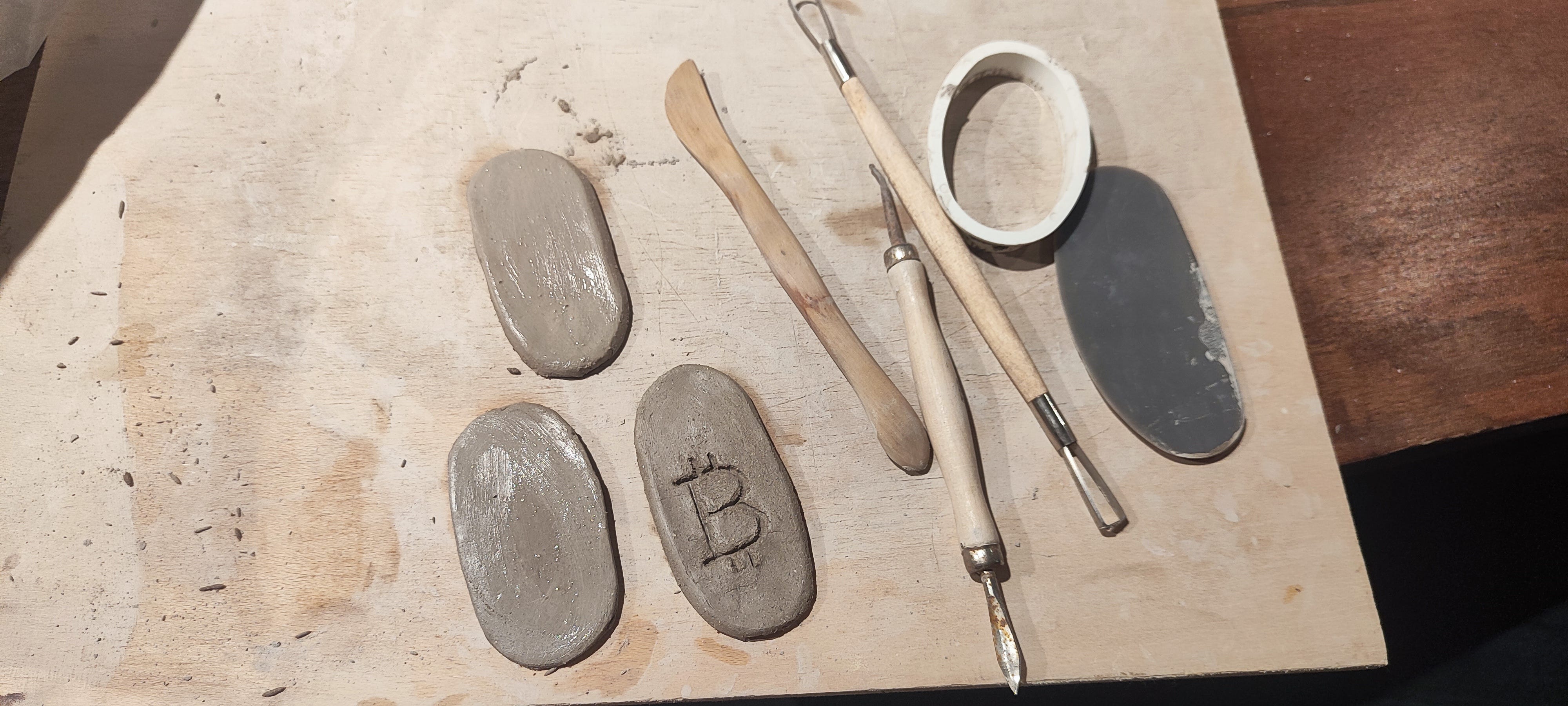
Apart from INANA, I´m in the research phase of a new Bitcoin art series. It will also be made of clay sculptures that are a modern twist to the ancient bullae discovered in the Middle East.
The bulla was a hollow clay ball used in ancient Mesopotamia beginning around 8000 BC that contained small clay tokens representing quantities and types of goods. In 1969, Denise Schmandt-Besserat, concluded they were counters used in an ancient accounting system.
Bullae were used to keep track of animals and food that had been traded, stored, or sold. The tokens were placed inside the hollow clay ball to prevent deception and keep all tokens together, with seals impressed into the opening to prevent tampering . This system eventually led to the development of Sumerian cuneiform around 3100 BC, the first known writing system. This progression from physical tokens to impressed marks on tablets represents one of the earliest forms of counting, data processing, and communication, setting the foundation for Mesopotamian Bronze Age civilization.
Essentially, these were like the first trust-less ledgers. I´m researching different ways to tell the Bitcoin story, recreating these sphere shaped clay envelopes.
I wish you a heartfelt holiday season, if you celebrate, and a Happy New Year.
May we all reunite with that which makes us human.
If you have received this newsletter from a friend, thank you for reading and I invite you to subscribe here:
(Español)
Hay una tienda de bazar cerca de nuestro supermercado local. Tienen diferentes nombres en cada país, pero ya sabes esas tiendas donde puedes encontrar cualquier cosa que necesites para la casa/manualidades/mascotas/jardín, etc., ¿y es relativamente barato? Esas.
Desde finales de noviembre, parece que el Espíritu de la Navidad se volvió loco allí. Hay muñecos de Papá Noel de todo tipo, luces, decoraciones colgando del techo de la misma manera abarrotada que los murciélagos en una cueva, diferentes melodías navideñas saliendo de montañas rusas de Papá Noel como cajas de música, y cualquier tipo de decoración navideña que puedas imaginar. Una explosión de rojo, verde y blanco por donde mires.
Vivo en España y aquí, Papá Noel ni siquiera es parte de la tradición navideña. Aquí, en la noche entre el cinco y el seis de enero, los tres reyes de Oriente vienen y traen regalos a los niños que se portaron bien durante el año. La tienda es propiedad de una familia china, que creo que no celebra la Navidad.
Me encuentro queriendo entrar en esa tienda más en estos días, debido a esta manía navideña, y toda la idea me intriga de una manera satírica. He comenzado a celebrar la Navidad solo desde que me casé, con la familia de mi pareja. Soy judía, así que al crecer, no celebrábamos en nuestra casa y Papá Noel nunca me trajo regalos. No sé si es la explosión hortera y sin estilo de decoraciones o las diferentes canciones de fondo, pero me lleno de alegría navideña cuando entro en ese bazar.
Mucha gente tiene sentimientos encontrados en torno a las fiestas. Las disputas familiares aumentan, los hospitales psiquiátricos reciben oleadas de llamadas de emergencia durante este tiempo, pero también nos dan cierto sentido de consuelo. La Navidad y Hanukkah están en la parte más oscura del año, cerca de la noche más larga. Es un momento de luz y unión en el frío del invierno. Los símbolos que inventamos y la anticipación nos hacen sentir algo, nos guste o no.
Creo que por eso los encuentro tan intrigantes. Están tan arraigados en nuestra conciencia colectiva que tienen el poder de conectarnos alrededor de algo solo con verlos. Incluso si no son parte de una tradición con la que crecimos.
Procesos de trabajo
Estoy terminando la parte de esculpir de mi sexto cáliz esta semana. Ha sido un proceso interesante y humilde aprender a usar la arcilla correctamente. Requiere mucha paciencia y trabajar de una manera muy ordenada. Suelo ser más caótica en la forma en que creo, así que está desafiando mis formas de trabajar. Me gusta el desafío. Llegas a aprender cosas nuevas sobre el trabajo y sobre ti misma.
La búsqueda del grial o, en este caso, del cáliz, es una búsqueda externa e interna. Mirar verdaderamente hacia adentro es tener el coraje de despojarnos de nuestras máscaras y mirarnos en el espejo. La historia de la diosa Inanna es una historia de despojarse de todo lo que la hacía diosa e ir desnuda al inframundo.
La historia original fue escrita en sumerio y requirió aproximadamente cincuenta años para reconstruirse y traducirse completamente. Es una de las lenguas atestiguadas más antiguas que se hablaron en la antigua Mesopotamia y no tiene una relación demostrable con ninguna otra lengua. Aquí hay un vídeo de trabajo en progreso con el comienzo de la historia, donde la narro en sumerio.
Me encantaría saber qué piensas de este vídeo. Si te resulta interesante escuchar estas historias antiguas contadas en su lengua original (asumiendo que las estoy pronunciando correctamente:). ¡Por favor, ponte en contacto con cualquier comentario! (info@yonatvaks.com)
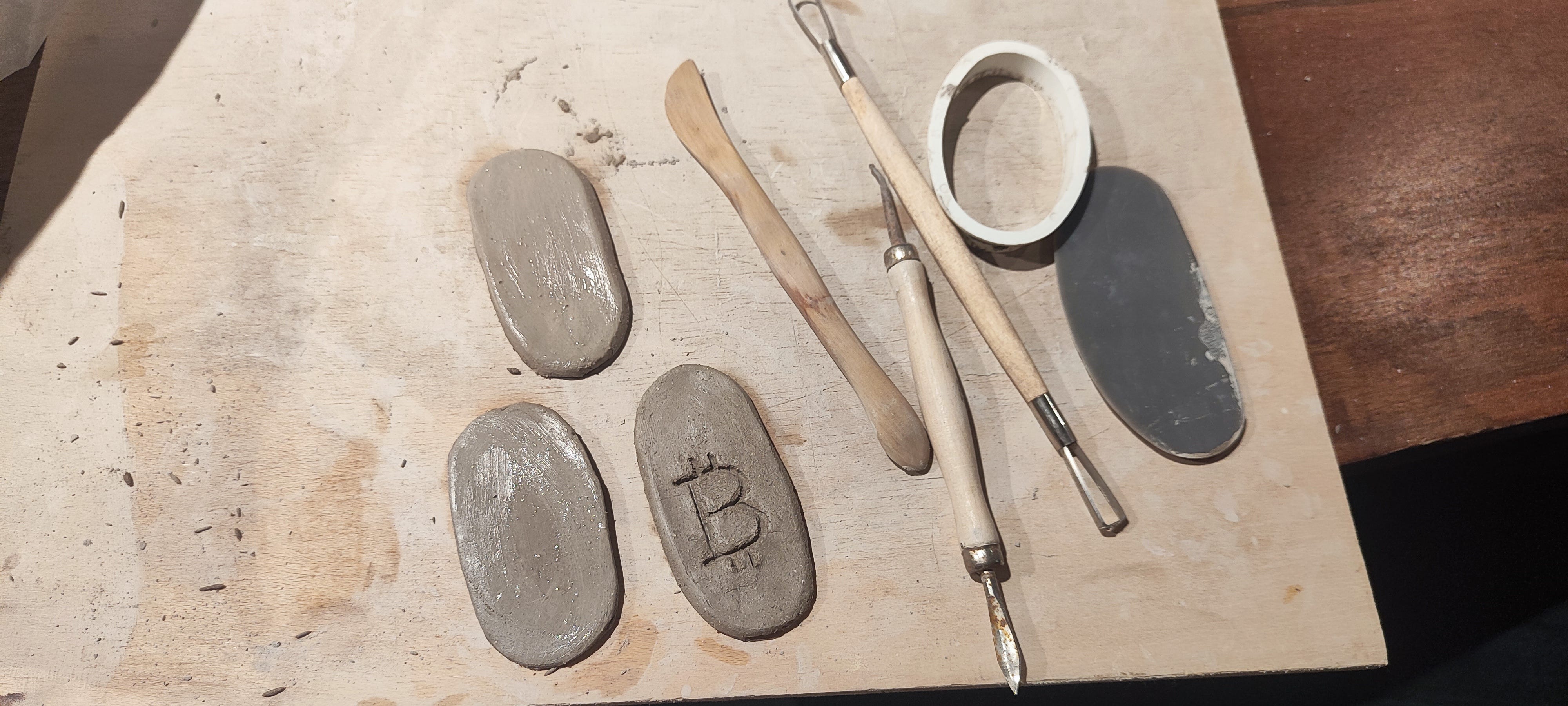
Aparte de INANA, estoy en la fase de investigación de una nueva serie de arte sobre Bitcoin. También estará hecha de esculturas de arcilla que son un giro moderno a las antiguas bullae descubiertas en Oriente Medio.
La bulla era una bola de arcilla hueca usada en la antigua Mesopotamia a partir del 8000 a.C. que contenía pequeñas fichas de arcilla que representaban cantidades y tipos de bienes. En 1969, Denise Schmandt-Besserat concluyó que eran contadores usados en un sistema de contabilidad antiguo.
Las bullae se usaban para llevar un registro de animales y alimentos que habían sido comercializados, almacenados o vendidos. Las fichas se colocaban dentro de la bola de arcilla hueca para evitar el engaño y mantener todas las fichas juntas, con sellos impresos en la abertura para evitar la manipulación. Este sistema eventualmente llevó al desarrollo de la escritura cuneiforme sumeria alrededor del 3100 a.C., el primer sistema de escritura conocido. Esta progresión de fichas físicas a marcas impresas en tablillas representa una de las formas más tempranas de conteo, procesamiento de datos y comunicación, sentando las bases para la civilización de la Edad de Bronce de Mesopotamia.
Esencialmente, estas eran como los primeros libros de contabilidad sin confianza. Estoy investigando diferentes formas de contar la historia de Bitcoin, recreando estos sobres de arcilla con forma de esfera.
Te deseo unas fiestas llenas de calidez, si las celebras, y un Feliz Año Nuevo.
Que todos nos reunamos con aquello que nos hace humanos.
Si has recibido este boletín de un amigo, gracias por leer y te invito a suscribirte aquí: