

(Español abajo)
A few weeks ago I found out about a cave, close to me, that holds the story of what I’ve been thinking about, writing about, and creating over the past year.
I was so excited to visit one of these places, and it was well worth the journey. I love these sorts of “coincidences.”
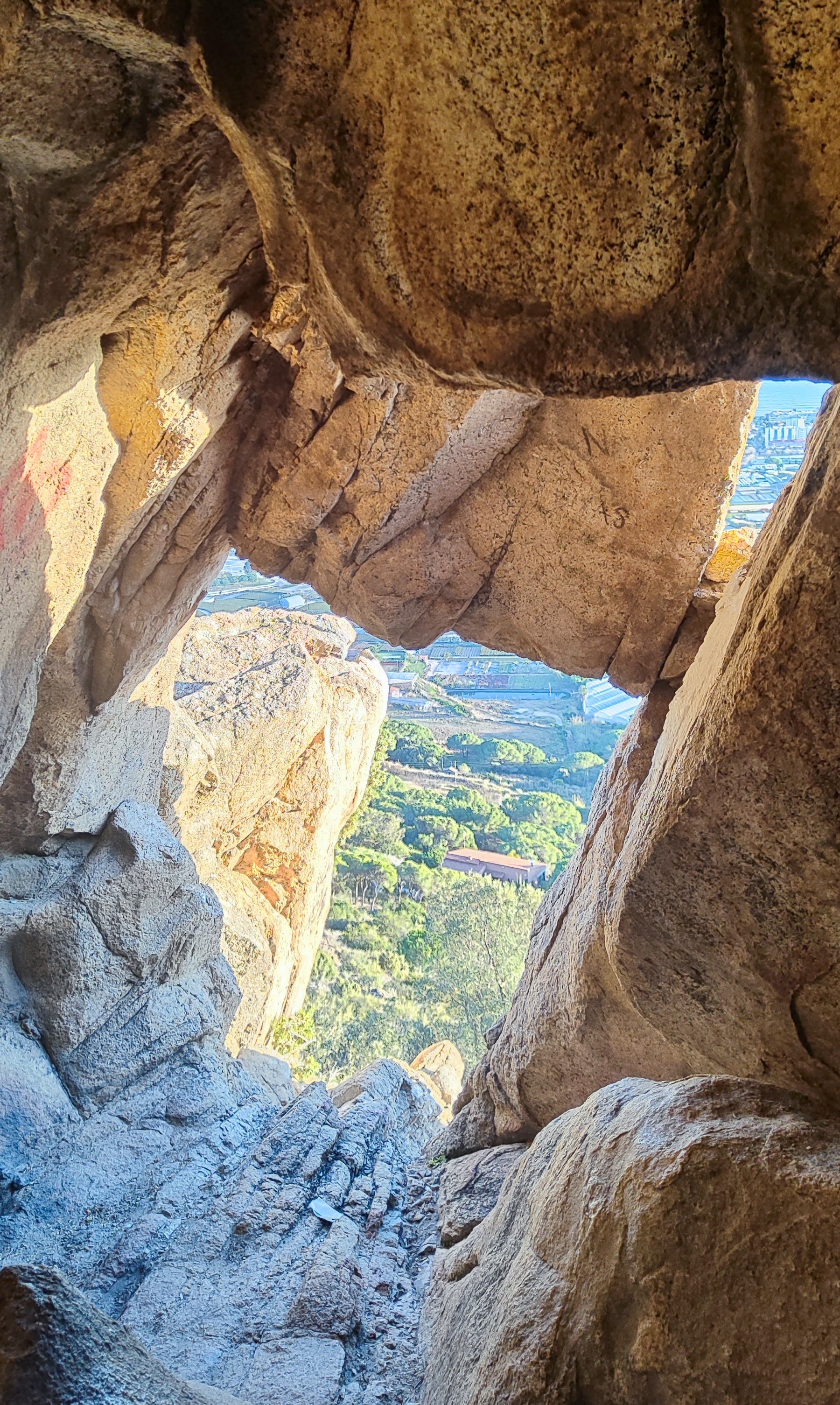
Approximately 35,000 ceramic fragments were found there. Miniature vessels used for offerings. Archaeologists believe this sanctuary was dedicated to a feminine fertility deity, and later to Demeter, the Greek goddess of fertility and harvest.
Fragments with paintings of her were found, along with small ceramic bull horns.
The bull was a symbol of masculine fertility and virility, accompanying mother goddesses (like Isis, Innana, Demeter).
Around the late 1st century BCE, during the Roman presence in this area, the cave sanctuary seems to end. Another sanctuary begins.
It is first dedicated to fertility deities, and then becomes a temple dedicated to the god Mithras.
Mithras is often depicted slaying a sacred bull.
His worship is associated with light, the sun, cosmic order, contracts, oaths, and salvation. It is a mystery cult, secretive, with initiations and hidden knowledge. Men-only membership. Seven grades of initiation. Brotherhood, loyalty, discipline.
The bull shifts from companion to sacrifice.
In 1707, a Christian cross was placed in the summit of the mountain to ward off storms and "demonic" influences.
When you go in the cave, you can definitely understand why is was chosen as a sanctuary.
When you sit inside, you feel protected. Its small and round. Almost like a womb.
However, when you look at the opening from the inside of the cave, you only see the sea below you. It feels like you can fall if you´re not careful.
Same place, Different Gods
The cave has multiple folk names till this day: Cave of the Witches, Cave of the Good Women, Cave of the Bad Women, Cave of the Enchanted Ones. Which shows how its origins haven´t been forgotten.
She’s still there in the stories. The goddess who protects the land, or the dangerous enchantress who leads knights astray.
Good or bad, depending on who’s telling the story and what they need her to be.
Does the cave hold magic because people believed it did for centuries? Or did they sense something there that made them believe?
When we change what we think is sacred, from earth goddess to sky god; from both to either/or - do we change how we perceive the world?
What This Has to Do With INANA - the work in progress
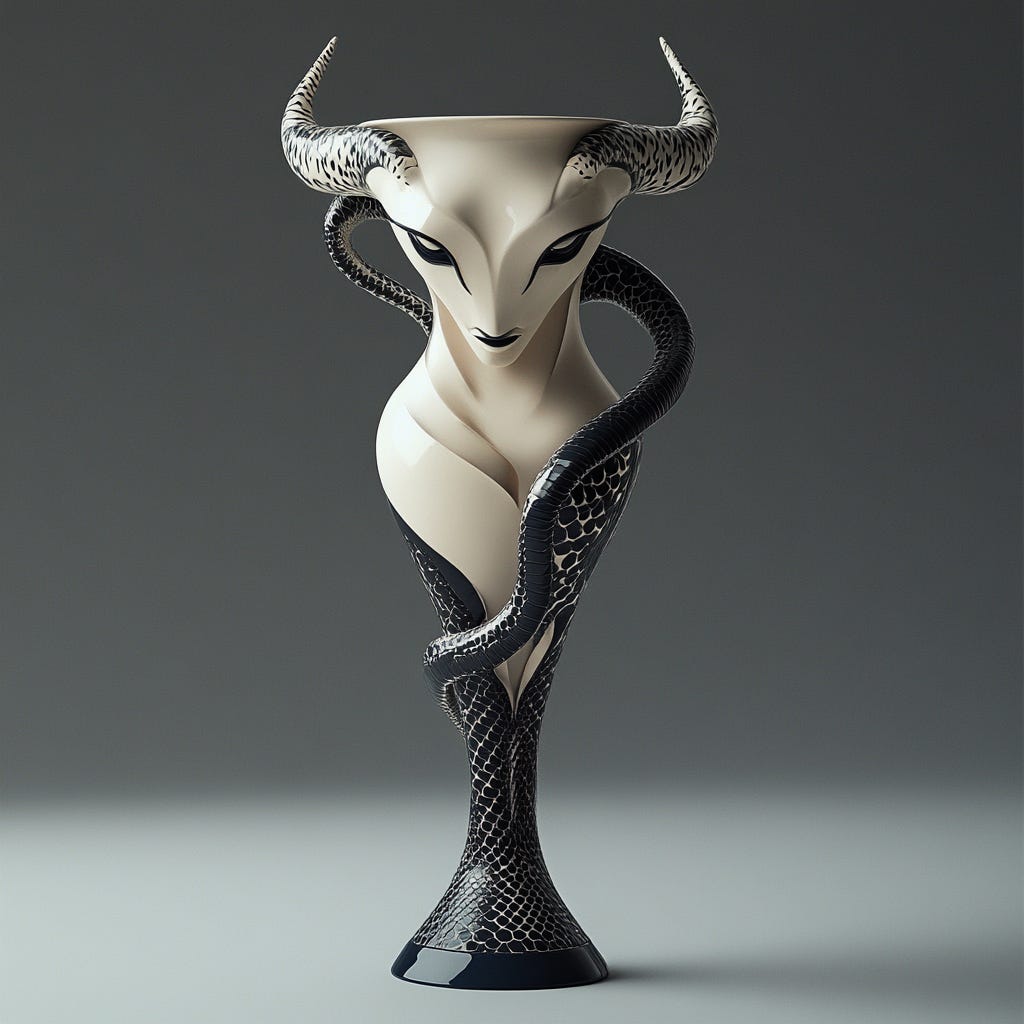
The chalices I´m making start as AI-generated perfection.
I put my ideas, my thoughts, my questions into prompts. Then I refine them, play around with them. Make them precise. Controlled.
The masculine archetype of logic and order. The promised future.
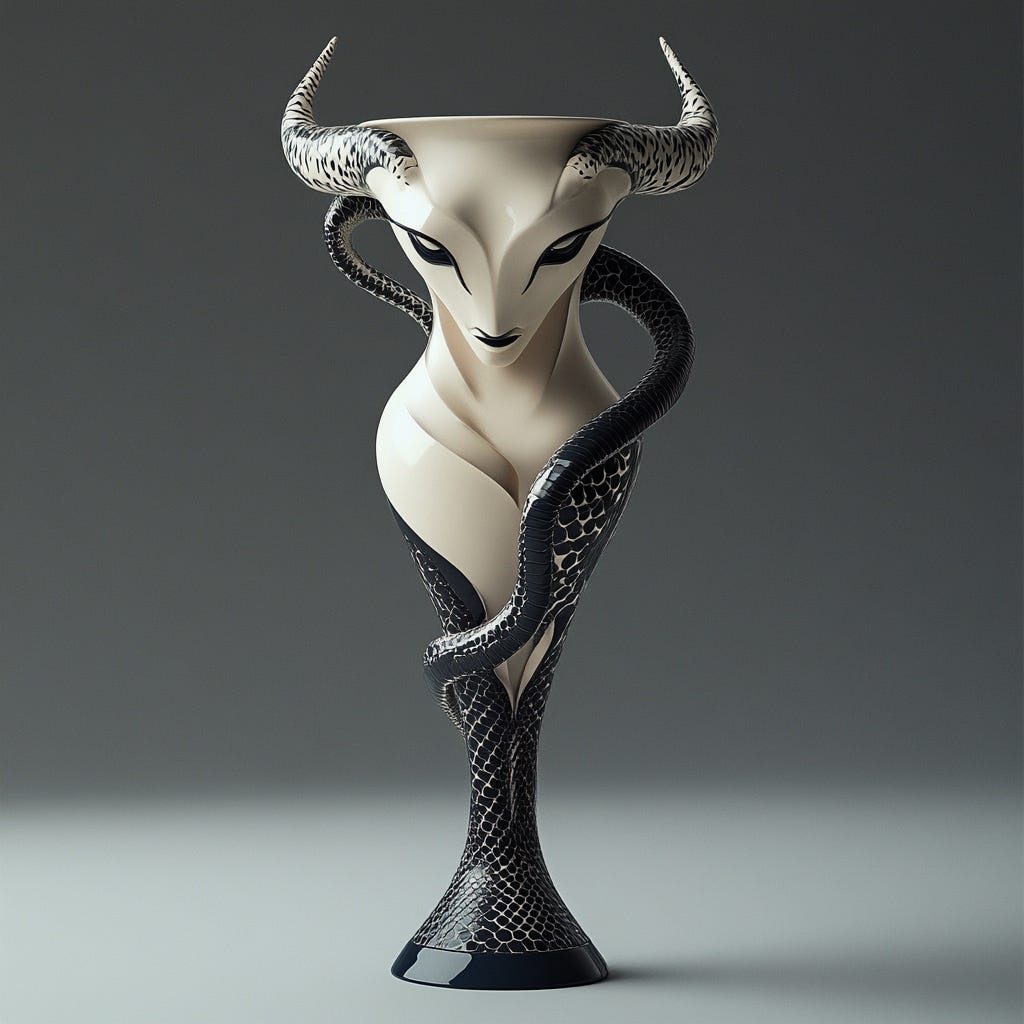
Then I create the hand made sculpture. The digital vision shaped by hand. Imperfect, unique, marked by human touch.
The feminine archetype of intuition and embodied presence. The forgotten past.
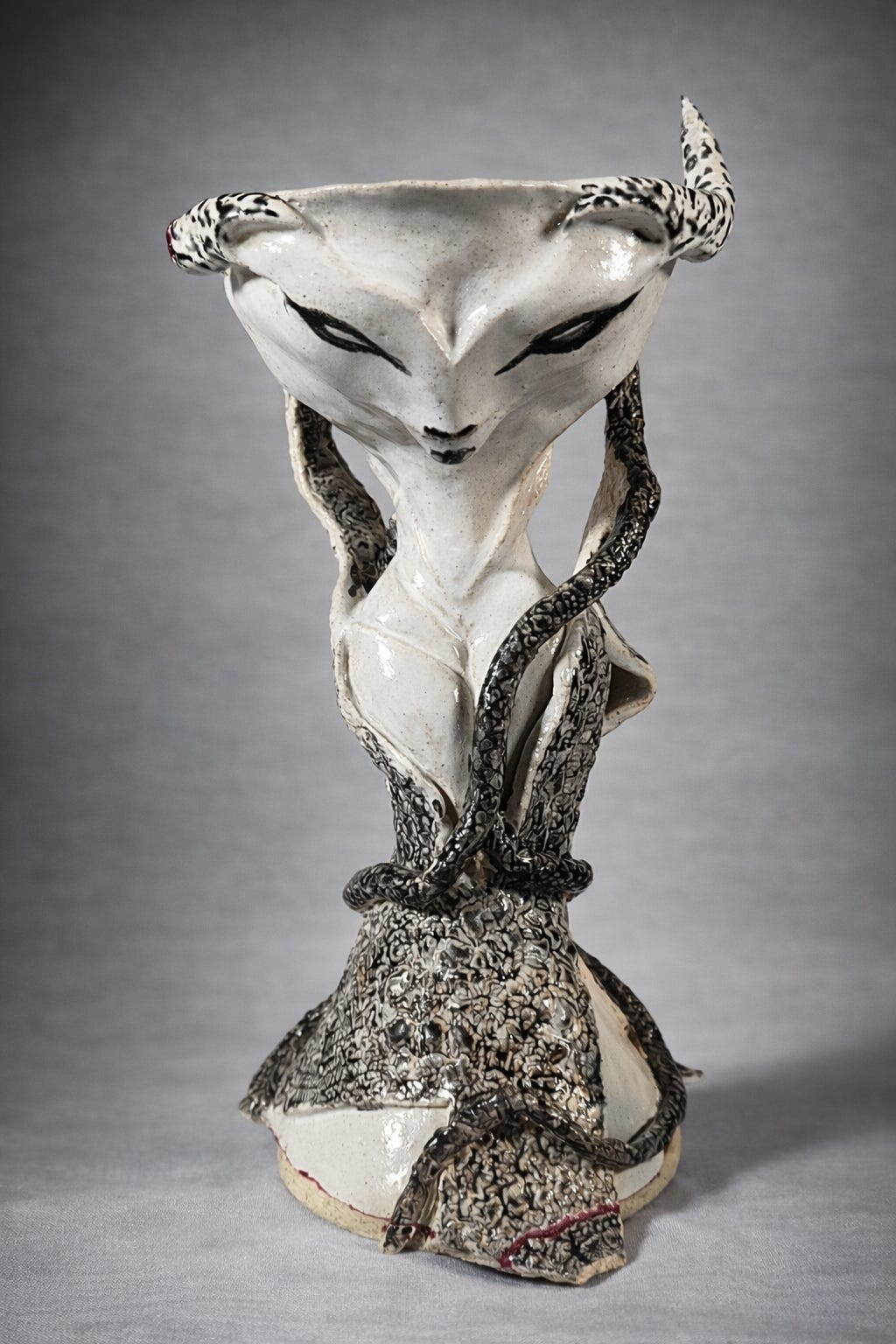
The process itself asks the question: how do we hold both? How do we move between different ways of being without losing what each one offers?
The Future Is Layered
Maybe sacred sites hold power because we’ve always known, somewhere in our bones, that certain places ask us to remember something important.
Maybe the magic isn’t in the cave.
Maybe it’s in our willingness to keep returning to the questions that matter.
What do you seek? What are you willing to bring? And when the story changes, what gets lost and what becomes possible?
The chalices are there to hold all of it: the ancient and the technological, the perfect and the imperfect, the masculine and the feminine.
Wholeness requires holding both.
Studio Notes
In the studio the story continues.
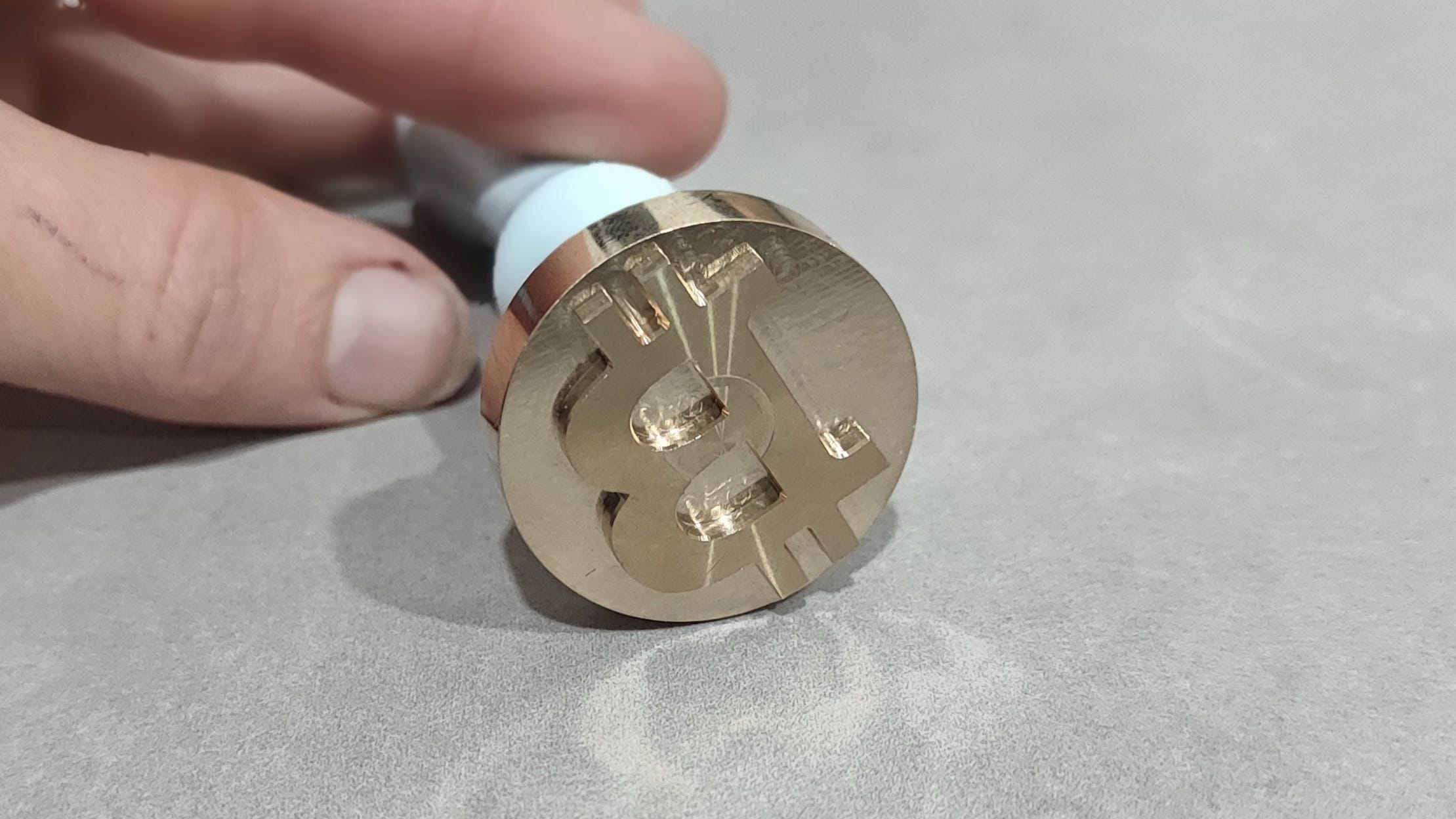
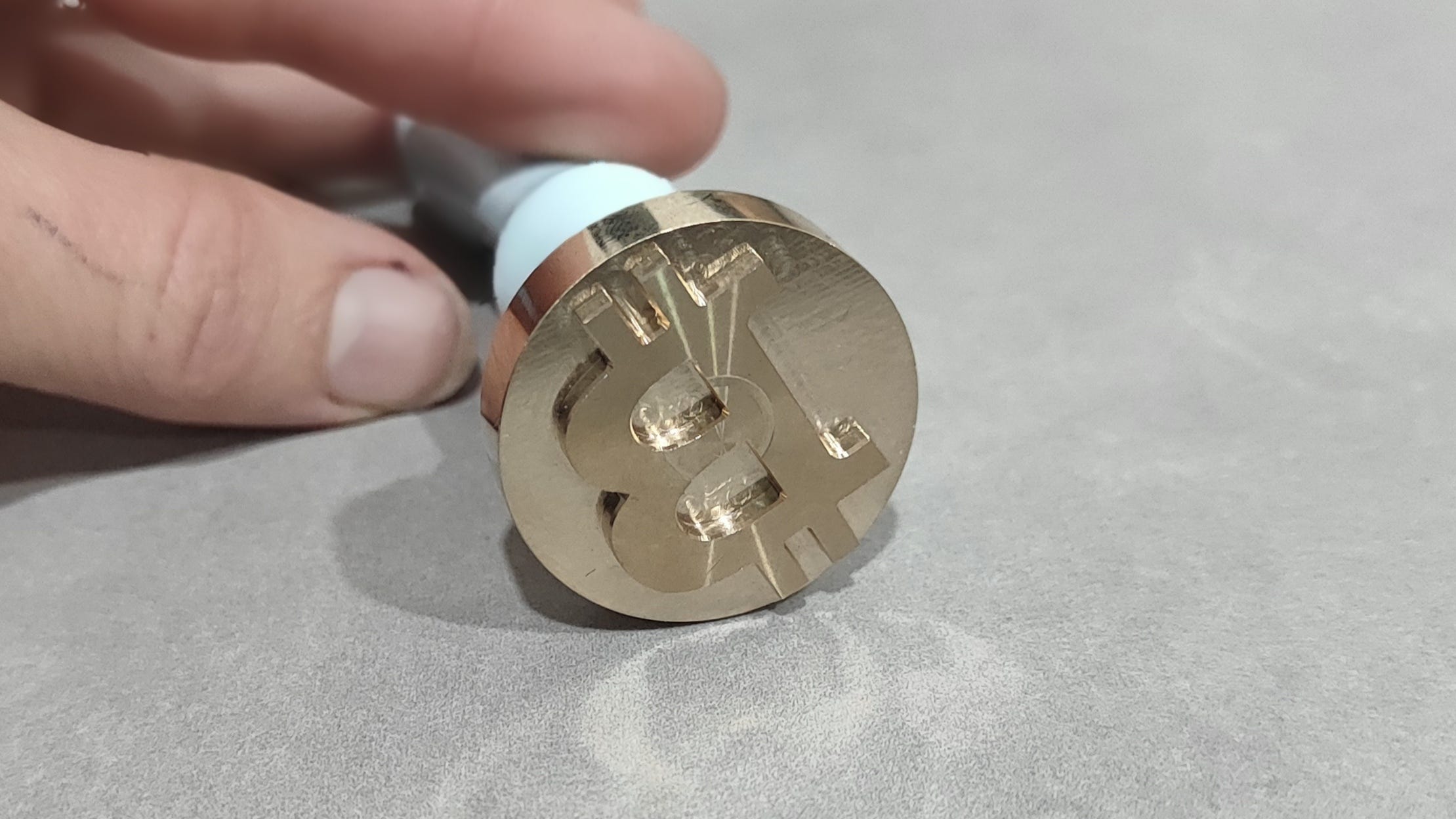
I finally received the clay stamp I needed to start making the bullae and the tokens I wrote about in the last newsletter. I´m now waiting for the perfect orange glaze to arrive (which I ordered almost two months ago..).
I am also in the process of building a new podcast!
Conversations between artists and collectors about different aspects of Bitcoin art. Excited about that and will definitely link to that next time!
If you´re interested in hearing more or maybe joining a conversation - let me know at info(at)yonatvaks.com.
Have a lovely week.
And as always I love hearing from you!
Yonat
If you have received this newsletter from a friend, thank you for reading and I invite you to subscribe here:
And if you´re still not following me on social media, here are the links:
Instagram: https://www.instagram.com/yonatvaks/
LinkedIn: https://www.linkedin.com/in/yonatvaks/
(Español)
Hace unas semanas descubrí una cueva, cerca de donde vivo, que contiene la historia de aquello en lo que he estado pensando, escribiendo y creando durante el último año.
Estaba muy emocionada por visitar uno de estos lugares, y el viaje valió totalmente la pena. Me encantan este tipo de “coincidencias”.
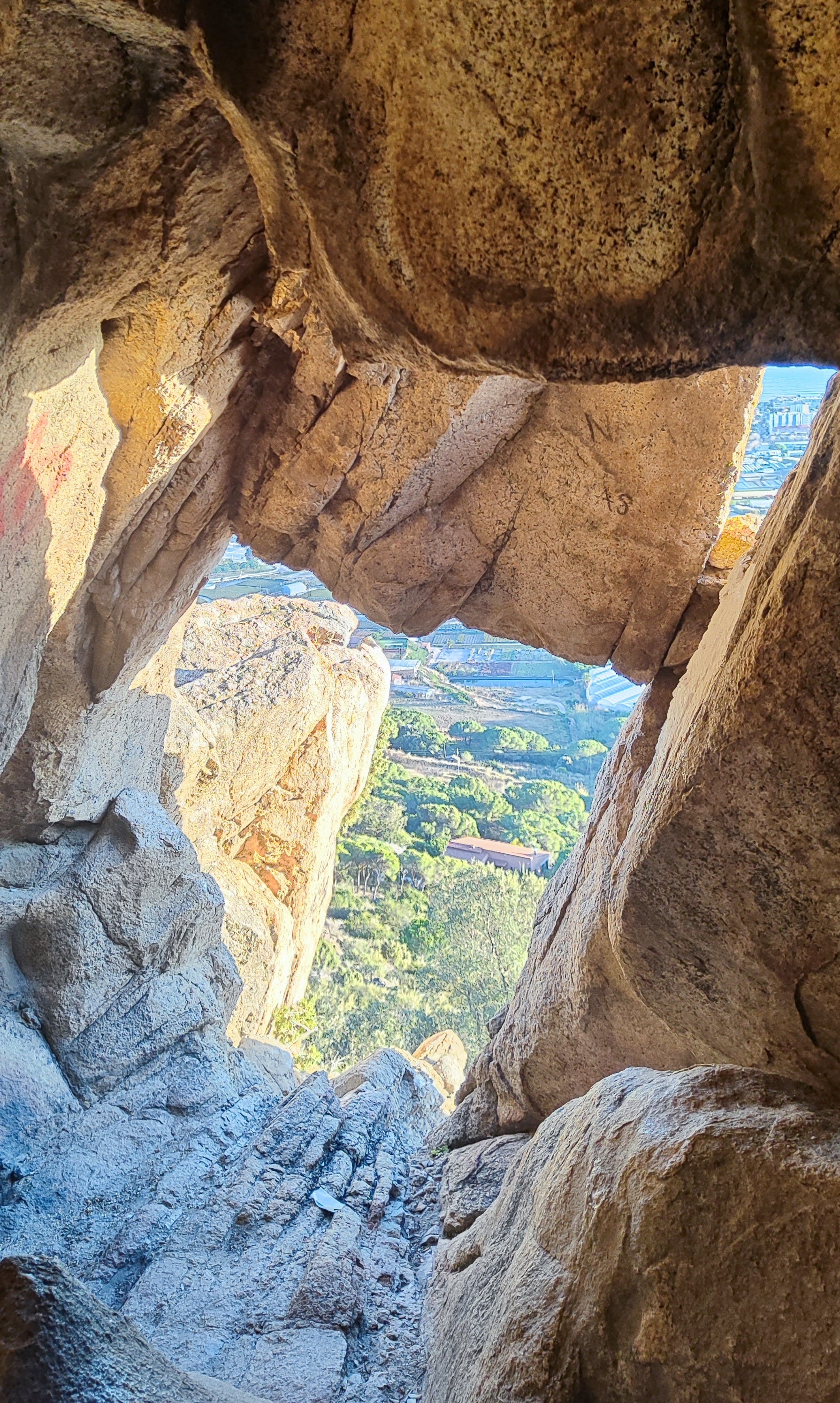
Aproximadamente se encontraron allí 35.000 fragmentos cerámicos. Vasijas en miniatura utilizadas para ofrendas. Los arqueólogos creen que este santuario estaba dedicado a una deidad femenina de la fertilidad y, más tarde, a Deméter, la diosa griega de la fertilidad y la cosecha.
Se encontraron fragmentos con pinturas de ella, junto con pequeños cuernos de toro de cerámica.
El toro era un símbolo de fertilidad masculina y virilidad, que acompañaba a las diosas madre (como Isis, Innana, Deméter).
Hacia finales del siglo I a. C., durante la presencia romana en esta zona, el santuario de la cueva parece llegar a su fin. Comienza otro santuario.
Primero está dedicado a deidades de la fertilidad y luego se convierte en un templo dedicado al dios Mitra.
Mitra suele ser representado sacrificando a un toro sagrado.
Su culto está asociado con la luz, el sol, el orden cósmico, los contratos, los juramentos y la salvación. Es un culto mistérico, secreto, con iniciaciones y conocimiento oculto. Exclusivo para hombres. Siete grados de iniciación. Hermandad, lealtad, disciplina.
El toro pasa de ser acompañante a sacrificio.
En 1707, se colocó una cruz cristiana en la cima de la montaña para ahuyentar tormentas e influencias “demoníacas”.
Cuando entras en la cueva, entiendes perfectamente por qué fue elegida como santuario.
Cuando te sientas dentro, te sientes protegida. Es pequeña y redonda. Casi como un vientre.
Sin embargo, cuando miras la abertura desde el interior de la cueva, solo ves el mar debajo de ti. Se siente como si pudieras caer si no tienes cuidado.
Mismo lugar, dioses diferentes
La cueva tiene múltiples nombres populares hasta el día de hoy: Cueva de las Brujas, Cueva de las Buenas Mujeres, Cueva de las Malas Mujeres, Cueva de las Encantadas. Lo cual muestra que sus orígenes no han sido olvidados.
Ella sigue ahí en las historias.
La diosa que protege la tierra,
o la peligrosa hechicera que conduce a los caballeros a su perdición.
Buena o mala, dependiendo de quién cuente la historia y de lo que necesite que ella sea.
¿La cueva contiene magia porque la gente creyó que la tenía durante siglos? ¿O percibieron algo allí que les hizo creer?
Cuando cambiamos lo que consideramos sagrado, de diosa de la tierra a dios del cielo; de ambos a uno u otro, ¿cambiamos la forma en que percibimos el mundo?
Qué tiene que ver esto con INANA – el trabajo en proceso
Los cálices que estoy haciendo comienzan como perfección generada por IA.
Pongo mis ideas, mis pensamientos, mis preguntas en prompts. Luego los refino, juego con ellos. Los hago precisos. Controlados.
El arquetipo masculino de la lógica y el orden. El futuro prometido.
Luego creo la escultura hecha a mano. La visión digital moldeada por la mano. Imperfecta, única, marcada por el contacto humano.
El arquetipo femenino de la intuición y la presencia encarnada. El pasado olvidado.
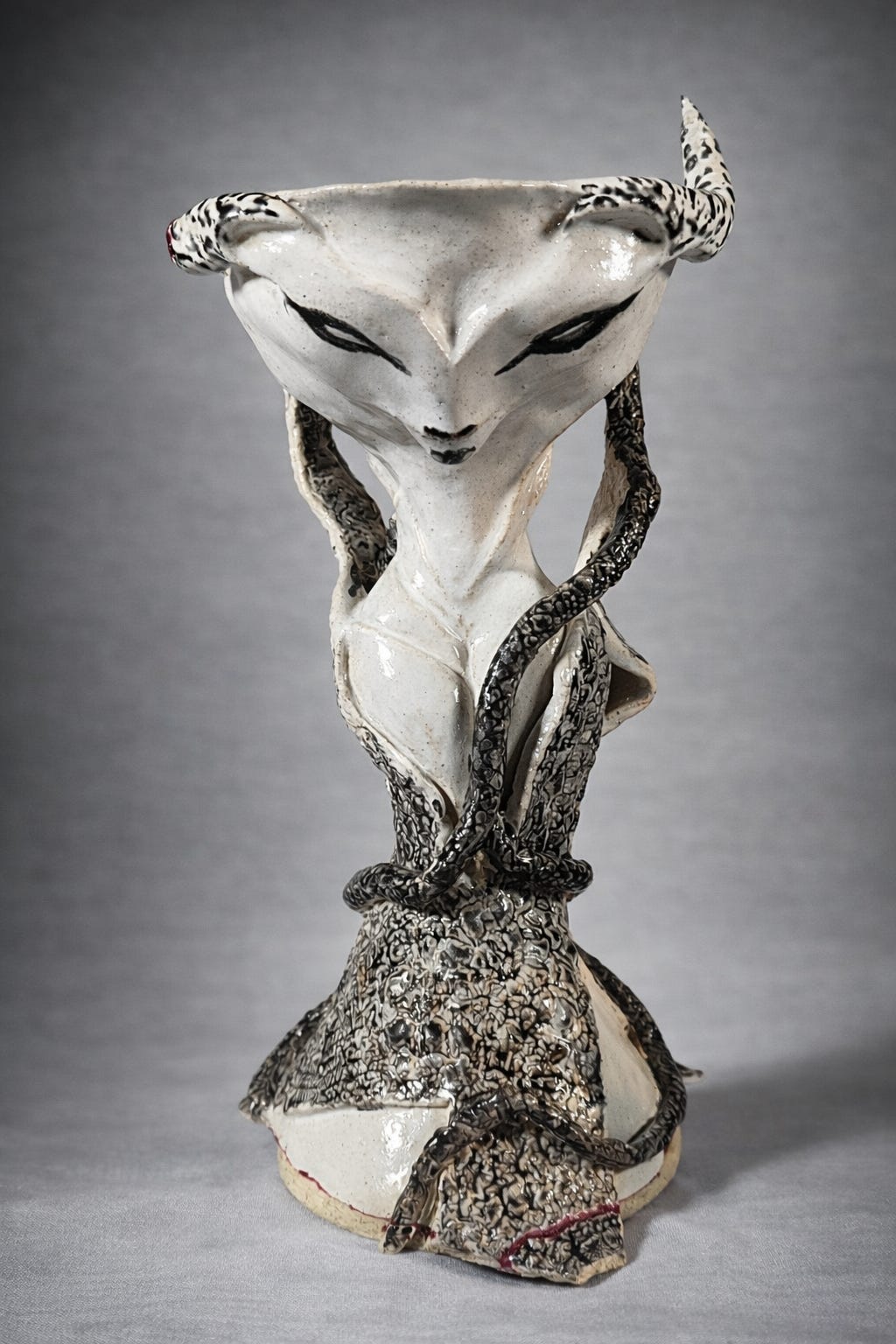
El propio proceso plantea la pregunta: ¿cómo sostenemos ambos? ¿Cómo nos movemos entre diferentes formas de ser sin perder lo que cada una ofrece?
El futuro lleva capas
Tal vez los lugares sagrados tienen poder porque siempre hemos sabido, en algún lugar de nuestros huesos, que ciertos sitios nos piden recordar algo importante.
Tal vez la magia no está en la cueva.
Tal vez está en nuestra disposición a volver una y otra vez a las preguntas que importan.
¿Qué buscas? ¿Qué estás dispuesto a traer? Y cuando la historia cambia, ¿qué se pierde y qué se vuelve posible?
Los cálices están ahí para contenerlo todo: lo antiguo y lo tecnológico, lo perfecto y lo imperfecto, lo masculino y lo femenino.
La plenitud requiere sostener ambos.
Notas de estudio
En el estudio la historia continúa.
Por fin recibí el sello de arcilla que necesitaba para empezar a hacer las bullae y las fichas de las que escribí en la última newsletter. Ahora estoy esperando a que llegue el esmalte naranja perfecto (que pedí hace casi dos meses…).
También estoy en el proceso de crear un nuevo podcast.
Conversaciones entre artistas y coleccionistas sobre diferentes aspectos del arte Bitcoin. ¡Estoy emocionada con ello y compartiré mas información la próxima vez!
Si te interesa saber más o quizás unirte a una de las conversaciónes, escríbeme a info(at)yonatvaks.com.
Que tengas una semana preciosa.
Y como siempre, me encanta leer vuestros comentarios.
Yonat
Si has recibido esta newsletter de parte de una amiga o un amigo, gracias por leer y te invito a suscribirte aquí:
Y si todavía no me seguís en redes sociales, aquí están los enlaces:
Instagram: https://www.instagram.com/yonatvaks/
LinkedIn: https://www.linkedin.com/in/yonatvaks/